
Tyre Maintenance Guide: Safety, Wear, and Getting More Kilometres
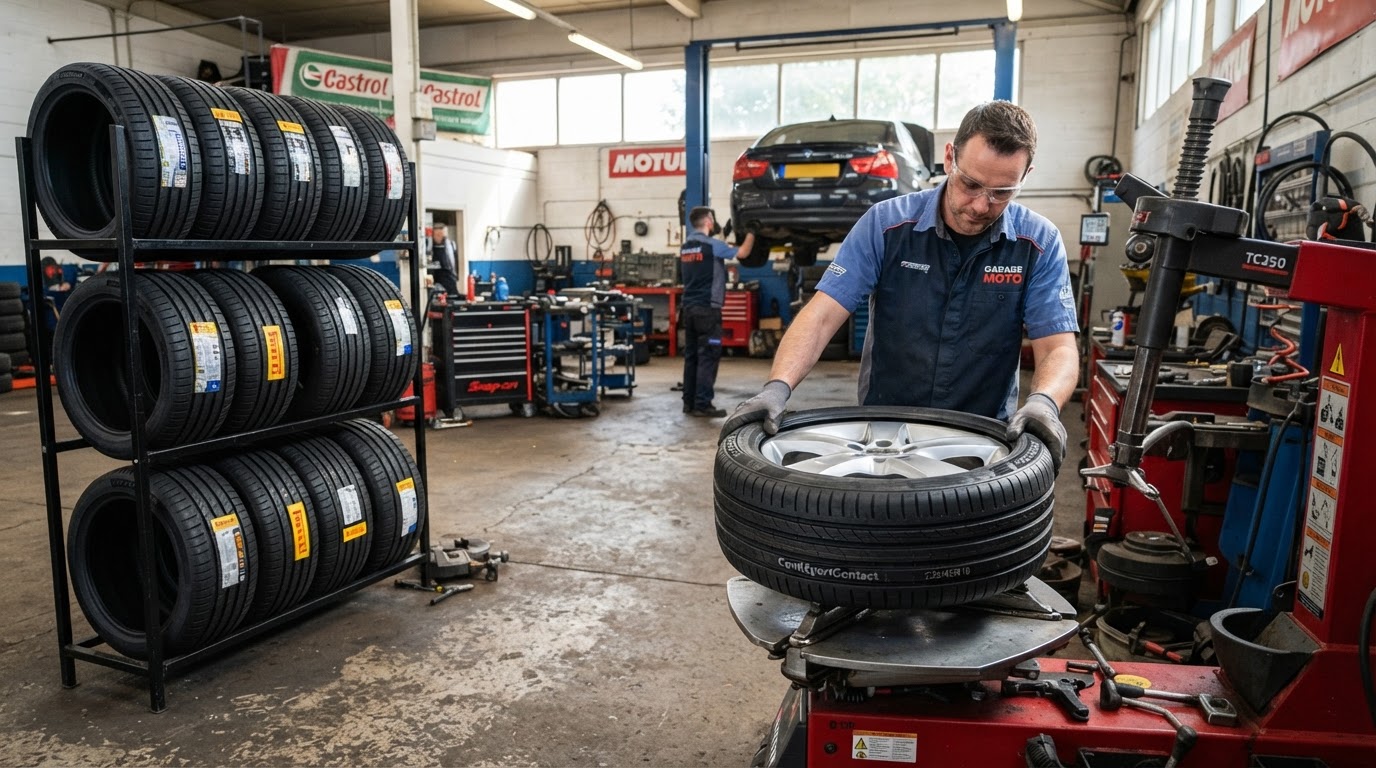
Check your pressures monthly
Under-inflated tyres run hot, wear on the shoulders, raise your fuel use, and stretch your braking distance. Over-inflated ones wear the centre and give a harsh, skittish ride. Check pressures once a month and before a long trip, when the tyres are cold, because heat from driving raises the reading and hides the real number. Use the placard pressure, usually on the driver's door jamb, not the max pressure moulded into the sidewall. That sidewall figure is the most the tyre can hold, not what your car wants. A ute loaded for a trip takes more pressure than the same ute empty, so use the loaded figure on the placard, not the empty one.
Know your tread depth
The legal minimum in Victoria is 1.5 millimetres across the whole tread face. Below that it's unroadworthy and your wet braking gets measurably worse well before you hit it, because the tread can't clear the water out from under the tyre. A five-cent coin is a rough gauge, but a proper tread gauge tells you what each tyre's actually got, and on each corner, which is where the story is. The tread blocks have wear bars moulded in, and when the tread wears down to them it's time. If you can see the wear bars flush with the rubber, the tyre's done, and the law agrees.
Rotate every 10,000km
Front and rear tyres wear at different rates. On a front-wheel-drive car the fronts carry the engine, do the steering, and do most of the braking, so they wear faster. Rotating front to rear every 10,000km spreads the wear across all four and adds kilometres to the set, because four tyres wearing evenly last longer than two wearing fast and two wearing slow. We do it as part of a service. Directional tyres have to stay on the same side of the car, so it's a straight swap front to rear, not a cross. Get it wrong and you'll reverse the tread pattern, which makes the tyre push water the wrong way and howl on the highway.
Sort uneven wear early
If one tyre's wearing on the inner or outer edge and the others aren't, the alignment's out or a suspension bush has gone. Feathering across the tread blocks, where the rubber feels saw-toothed when you run your hand over it, points the same way. Driving on a misaligned tyre scrubs the rubber off and can destroy a new set in a few thousand kilometres. Get a wheel alignment done after fitting new rubber, and any time you've hit a pothole or a kerb hard. A set of KENDAs ruined by a toe-out alignment is money straight off the tread and into the bin.
When to replace rather than repair
A clean puncture in the centre of the tread we can plug and patch from the inside, and it'll run the rest of its life. A puncture in the sidewall or shoulder can't be repaired safely, because the sidewall flexes and the plug won't hold under load. A tyre worn past the limit, or one with cracks in the sidewall from age and sun, is a replacement regardless of tread, because the rubber's gone hard and it can't grip. We inspect before we sell you anything, because a repair that fails on the Calder isn't worth the few dollars saved, and a cracked sidewall that lets go at a hundred k's is a crash.
The age limit nobody mentions
Tyres have a date code stamped on the sidewall, four digits for the week and year of manufacture. Rubber perishes with age, and a tyre that's six years old with good tread can still be past it, because the compound has hardened and the grip has gone. A tyre that's ten years old is due for replacement regardless of how much tread is left, because the rubber can't shed water and it can't hold the road in the wet. We check the date code when the car's in, and we flag a tyre that's old before it's worn, because the tread gauge doesn't tell you the whole story.
Key Takeaway
Keep your rubber legal, safe, and wearing flat with KENDA tyres fitted and balanced at PRD Automotive. Ring Ben on 03 9193 6500 to sort the set, or have a look at how to read the signs your alignment is out to catch the wear before it costs you.
Have a Question About Your Car?
Ben is happy to talk through any part of your car's servicing or repair. Honest, upfront quotes before any work starts, and Afterpay & Zip Pay available in store.
Keep Reading
Logbook Servicing Explained: Protect Your New Car Warranty
You don't have to go back to the dealer for every service. A licensed independent mechanic can keep your new car warranty fully intact.
Brake Safety: 7 Signs You Can't Afford to Ignore
A squeal at the lights, a grind first thing, a pedal that sinks. Your brakes talk before they fail. Here's what each sound means.
Car Won't Start? How to Tell If It's Your Battery or Alternator
A flat battery and a dud alternator look the same from the driver's seat. Here's how to tell them apart before you pay for the wrong part.