Car Won't Start? How to Tell If It's Your Battery or Alternator
When it's the battery
A battery on its way out cranks slow, dims the dash lights on the turn of the key, and sometimes gives a rapid click from the starter solenoid because there's enough voltage to pull it in but not enough to turn the motor. Most car batteries last three to five years depending on use and climate, and the ones doing short trips around the northern suburbs die younger than the ones getting a good run each day. Short trips, a phone on the charger, and a cold morning all shorten that. If the car bump-starts or jump-starts and runs fine once it's going, the battery's the suspect. We load-test it before we replace anything, because a flat battery and a dead battery aren't the same thing.
When it's the alternator
If the car starts but the battery light comes on the dash, or the headlights flicker and dim at idle and brighten when you rev it, the alternator isn't charging. The car's running on battery alone, and the battery will go flat while you're driving, which is how you end up dead on the side of the Hume. A failing alternator can also overcharge, cooking the battery with too much voltage and boiling the electrolyte out of it, which is how a dud alternator kills a brand-new battery in a week. The fix is the alternator, not the battery, and fitting a battery into a car with a dead alternator is a few hundred dollars that doesn't fix the problem.
The test that saves you the wrong part
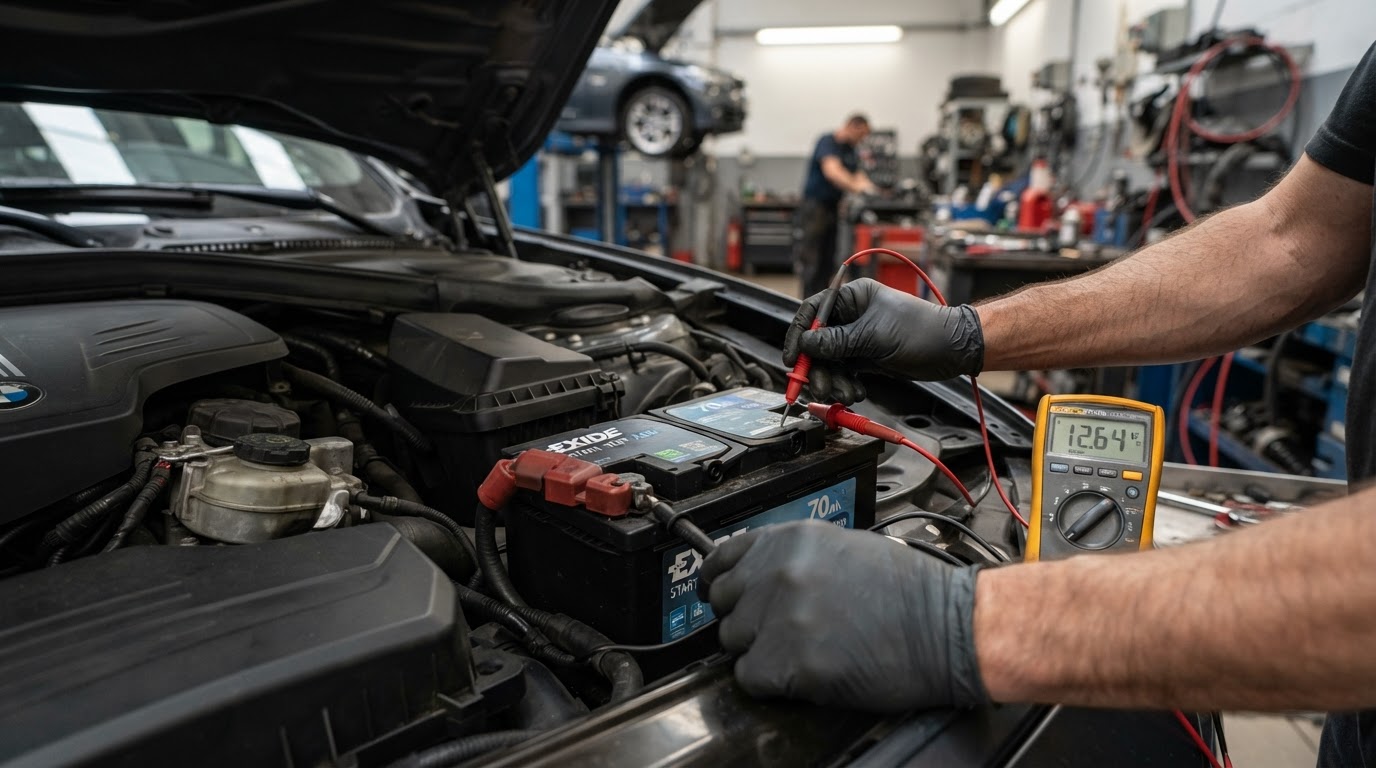
The right approach is to load-test the battery and check the charging voltage with the engine running. A healthy alternator sits around 13.8 to 14.4 volts at the battery terminals with the engine running and the lights on. Below that, it's not charging. Way above it, it's overcharging and it'll cook the battery. We test the battery, the charging output, and the starter draw in one go, so the part we sell you is the part that failed. A code reader won't tell you this. A load tester will. The test takes minutes and it saves you the cost of the wrong part, which is why we run it before we quote anything.
Other things that flatten a battery
A parasitic draw drains the battery while the car's parked. A boot light that stays on, an old alarm module, a stereo that doesn't shut down, or a diode gone in the alternator rectifier can all pull current overnight. We test for draw with the car asleep, pulling fuses one at a time to find which circuit's still live. Sometimes it's the alternator diode, which means the alternator's the fix, not the battery. Sometimes it's a module that doesn't go to sleep. You don't know until it's on the tester, and guessing at it is how you replace the battery three times before you find the draw.
The warning signs before the no-start
A flat battery rarely comes out of nowhere. The week before it dies, it cranks a beat slower on a cold morning. The dash lights dim for a second when you start it. The headlights look brighter when you rev it, which is the alternator covering for the battery. If you catch it then, you're ahead of the tow truck. If you wait for the no-start, you're late for work and you're calling us from a carpark. A load test at a service catches the battery that's on its way out before it's out, and that's cheaper than a roadside call.
Don't guess, test
The honest answer is that a flat battery and a dud alternator share the same symptom from the driver's seat, which is the car won't start. The difference is what happens after a jump start. If it runs and charges, the battery was flat. If it runs but the light stays on and the voltage drops, the alternator's gone. We test before we quote, because a new battery into a car with a dead alternator is a few hundred dollars that doesn't fix the problem, and a new alternator into a car with a dead battery is the same mistake the other way round.
Key Takeaway
Don't pay for the wrong part. Bring it in for a proper battery and charging system test at PRD Automotive. We fit Neutron Power batteries and only replace what's actually failed. Call Ben on 03 9193 6500. Cold mornings make a tired battery worse, so it's worth reading our winter driving checklist too.
Have a Question About Your Car?
Ben is happy to talk through any part of your car's servicing or repair. Honest, upfront quotes before any work starts, and Afterpay & Zip Pay available in store.
Keep Reading
Logbook Servicing Explained: Protect Your New Car Warranty
You don't have to go back to the dealer for every service. A licensed independent mechanic can keep your new car warranty fully intact.
Brake Safety: 7 Signs You Can't Afford to Ignore
A squeal at the lights, a grind first thing, a pedal that sinks. Your brakes talk before they fail. Here's what each sound means.
Tyre Maintenance Guide: Safety, Wear, and Getting More Kilometres
Your tyres are the only thing between the car and the road. Get pressures, rotation and alignment right and they last thousands of km longer.