Check Engine and Warning Lights: What They Really Mean
A steady check engine light
A steady light means the computer has logged a fault, usually emissions, a sensor, or an ignition misfire. It's not an emergency, but it won't clear itself either, and driving on it risks the part that flagged the fault taking the next part with it. The code tells us which system flagged the fault. What it doesn't tell you is which part failed, because a code for an oxygen sensor can mean the sensor's dead, or the sensor's reading a genuine lean condition caused by a vacuum leak. The code is where the diagnosis starts, not where it ends. We read the live data to see what the sensor's actually reporting, because a code on its own is half the story.
A flashing check engine light
A flashing light is a misfire bad enough to dump unburnt fuel into the catalytic converter, which overheats and melts the honeycomb inside it. That's a part that costs more than the repair that would have prevented it, and it's the one fault you really don't want to ignore. A flashing light means back off the throttle, drive gently, and get it booked in now, not next week. It can be a dud spark plug, a failed coil, or a stuck injector, and each one has a different fix. We read the misfire count per cylinder to find which one's missing, because changing all six coils to find one dead one is an expensive way to do it.
The battery or charging light
If the battery light comes on while you're driving, the alternator isn't charging and you're running on whatever's in the battery. It'll go flat, and the car will die, usually at the worst point of the commute. Turn off everything you don't need, the air-con, the stereo, and get to a workshop before it does. A failing alternator can also overcharge, which cooks the battery and boils the electrolyte out of it. We test the charging voltage and the battery before we quote, because the symptom's the same from the driver's seat and the fix is different. Our battery and alternator guide goes deeper on that one.
ABS and stability warnings
An ABS light means the anti-lock function has a fault. Your brakes still work, you just don't have the assistance that stops the wheels locking up in a panic stop, and in the wet that's the assist you want. It's often a wheel speed sensor or a tone ring with corroded teeth, sometimes a wiring fault in the harness to the hub. A stability warning is the same family of fault, and the light means the system that pulls you back into line in a slide has given up. We read the code, check the sensor signal on the scope, and find which wheel's dropped out. A red brake warning is different, that's fluid level or a hydraulic fault, and you stop safely and don't drive on it.
Why clearing a code doesn't fix the car
A fault code is a symptom. The light comes on because the computer saw a reading outside its expected range. Wipe the code without fixing the cause and the light comes back, usually after the fault has done more damage. A lean code you clear instead of fixing lets the engine run hot and detonate, which pits the pistons. A misfire you clear lets the catalytic converter melt, which turns a coil pack into a cat replacement. We diagnose the cause first, fix it, then clear the code, so it stays off because the fault's gone, not because the memory's been wiped. A light that's been cleared and comes back is the light that costs you twice.
The tradeoff every driver faces
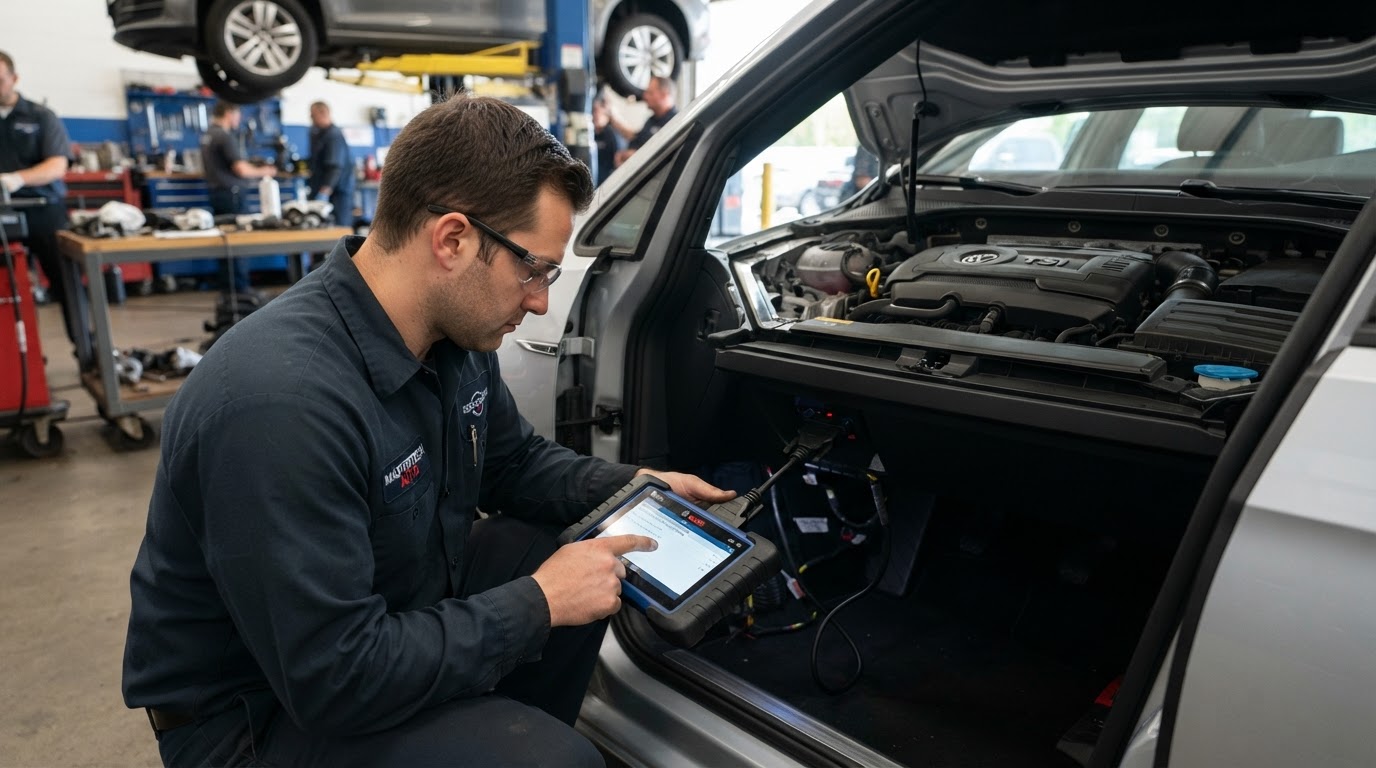
Sometimes it's the sensor, and sometimes it's the thing the sensor is reading. You don't know which until it's on the hoist with the scan tool hooked up and the live data on the screen. A code reader at a parts store gives you the code, but the code without the live data is a postcode without the address. We read both, because chasing a code without the data is how you replace a good sensor and the light comes straight back. It takes a bit longer and it costs a bit more than a free code read, but it's cheaper than the wrong part and a light that never clears.
Key Takeaway
Don't guess at a warning light. Get the code read and the cause found at PRD Automotive. We scan it, read the live data, and fix the actual fault so it doesn't come back. Call Ben on 03 9193 6500 to book a diagnostic.
Have a Question About Your Car?
Ben is happy to talk through any part of your car's servicing or repair. Honest, upfront quotes before any work starts, and Afterpay & Zip Pay available in store.
Keep Reading
Logbook Servicing Explained: Protect Your New Car Warranty
You don't have to go back to the dealer for every service. A licensed independent mechanic can keep your new car warranty fully intact.
Brake Safety: 7 Signs You Can't Afford to Ignore
A squeal at the lights, a grind first thing, a pedal that sinks. Your brakes talk before they fail. Here's what each sound means.
Tyre Maintenance Guide: Safety, Wear, and Getting More Kilometres
Your tyres are the only thing between the car and the road. Get pressures, rotation and alignment right and they last thousands of km longer.