Restoration vs Repair: When to Invest in a Project Vehicle
Start with the structural metal
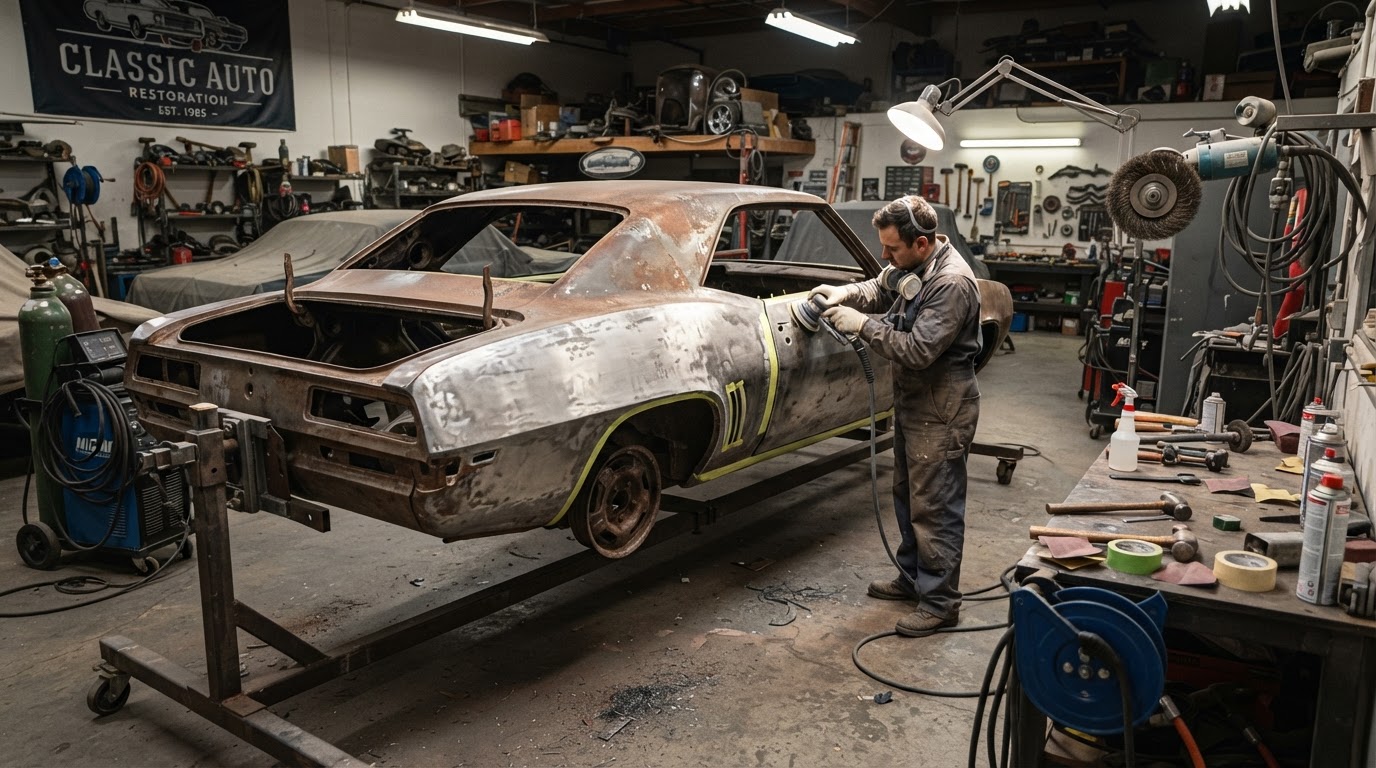
The biggest cost in a restoration isn't the engine or the paint. It's the rust you can't see. We look at the sills, the chassis rails, the floor pans, the strut towers, and the rear quarter panels where they meet the boot floor. Surface rust on a panel is cosmetic. Rust that's eaten through the structure is the difference between a restoration and a write-off, because you're not restoring a car, you're building one around a new floor. Ben gets under it and tells you straight how far the corrosion's gone before you commit a dollar, because the rust you find at the start sets the budget for the whole build.
The mechanicals tell you the second cost
A car that's sat for years needs the fuel system gone through, the brakes rebuilt, the coolant and hoses replaced, and the tyres fitted, because rubber perishes off the car as well as on it. A seized engine from sitting is worse than one that was running when it was parked, because moisture in a stationary cylinder pits the bore and rings it for a rebuild. We go through the engine, the brakes, the fuel, and the cooling system and give you the list of what it'll take to make it safe and running. Some of it you can do yourself. The rest is the quote, and the quote's the number that decides whether the project's worth it.
Set the budget against the finished value
A restoration makes sense when the car has sentimental or collector value that justifies the spend, or when it's a car you love and intend to keep. It doesn't make sense when the cost of the work exceeds the finished value and there's no emotional attachment to carry it, because a car worth fifteen grand that costs twenty to restore is a car you'll never sell for what it owes you. We break the job into stages, structural first, then the mechanicals, then paint and trim, and quote each stage as we open it up. That way you see the cost accumulating against the value before you're in too deep to turn back.
The parts you can't get
Some parts aren't made any more and aren't available secondhand in good condition. Trim pieces, badging, specific glass, and interior panels for low-volume models can stop a project dead at the trim stage, which is the worst stage to find out you can't finish it. Before you start, we check what's available and what isn't. Sometimes a pattern part exists but the quality's poor and it doesn't fit right. Sometimes the only option is a donor car, which is another cost and another project. Knowing the parts situation up front stops a restoration stalling halfway with no way forward and a shed full of panels you can't use.
When to walk away
If the structural rust has gone through the chassis rails or the critical mounts, or if the spend required far exceeds the finished value and the car's got no sentimental pull, it may not be worth it. We'll tell you that, because there's no upside in talking a customer into a job that ruins them. A restoration should be something you want to finish, not a debt you regret starting. The honest call is sometimes to sell it to someone further along the path and find a better base to start from, and we'd rather lose the job than take your money for a car that won't come right.
The honest tradeoff on time
Restorations take longer than anyone plans for, because the car reveals itself as you pull it apart. A sill that looks solid can be full of bog under the paint. A diff that turns freely can be full of metal filings. We stage the work so you see each cost as it comes, and we quote each stage before we start it, so you're never paying for a surprise. The tradeoff is time, because a good restoration can't be rushed, and a rushed restoration is a bad one. If you want it done right, it takes as long as it takes, and if you want it done fast, it costs what it costs.
Key Takeaway
Bring the project in and Ben will go over it with you, the structure, the mechanicals, the parts, and the honest budget. Ring 03 9193 6500. If you want to know who you're dealing with first, read why an owner-operated workshop matters.
Have a Question About Your Car?
Ben is happy to talk through any part of your car's servicing or repair. Honest, upfront quotes before any work starts, and Afterpay & Zip Pay available in store.
Keep Reading
Logbook Servicing Explained: Protect Your New Car Warranty
You don't have to go back to the dealer for every service. A licensed independent mechanic can keep your new car warranty fully intact.
Brake Safety: 7 Signs You Can't Afford to Ignore
A squeal at the lights, a grind first thing, a pedal that sinks. Your brakes talk before they fail. Here's what each sound means.
Tyre Maintenance Guide: Safety, Wear, and Getting More Kilometres
Your tyres are the only thing between the car and the road. Get pressures, rotation and alignment right and they last thousands of km longer.