
Cooling System Care: Preventing Overheating and Costly Repairs
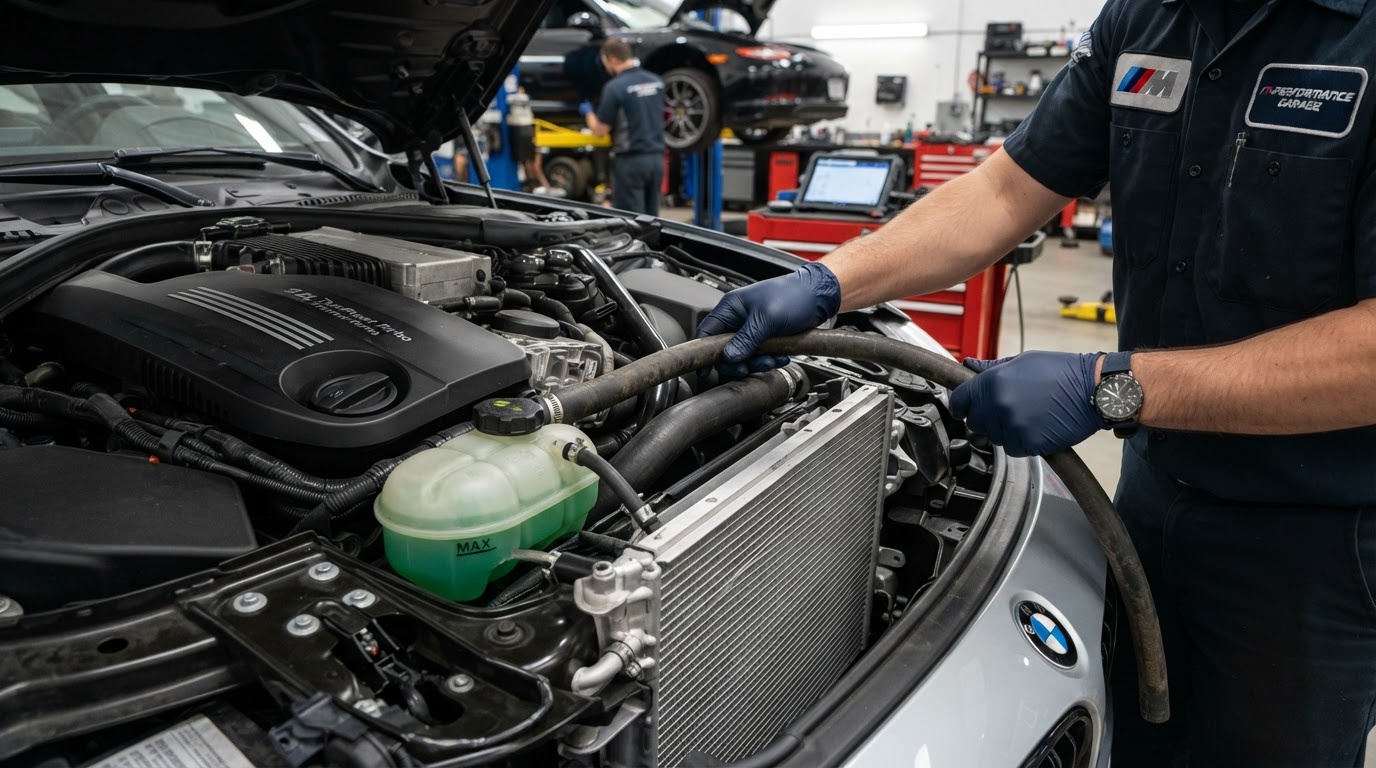
What the temperature gauge is telling you
The gauge reads the coolant temperature in the engine, not the outside air. Normal sits around the middle. If it creeps past that, the system's not shedding heat fast enough. It can be a stuck thermostat that won't open, a water pump that's stopped circulating, a blocked radiator, or a low coolant level from a slow leak. Pull over before the gauge hits the red, because once the alloy cylinder head overheats it warps, and a warped head blows the gasket. Switch off and let it cool before you check anything under the bonnet, because a hot radiator cap will spray scalding coolant under pressure and a hot engine has moving parts that'll take your fingers.
Find the leak before it finds you
Coolant leaks show up as puddles under the car, a sweet smell in the cabin from a heater core leak, or a fogged windscreen on a cold morning when the heater's on. The plastic radiator tanks crack with age and heat cycling. Hoses split where they clamp onto the pipe, usually at the top hose where the heat's highest. The water pump weeps from the seal's drain hole when the bearing's going, and a weeping pump is a pump about to seize. We pressure-test the system cold, pumping it to the cap pressure, and watch for where the coolant pushes out. A slow leak you can't see from above is the one that strands you, so we find it on the tester before it finds you on the freeway.
Flush it before the coolant turns on you
Long-life coolant breaks down over time. The anti-corrosion additives deplete, the ph drops, and the coolant turns acidic. Acid coolant eats the alloy radiator tank, the water pump impeller, and the heater core from the inside out, which is why a radiator that looks fine on the outside can be half-blocked on the inside. Most schedules call for a flush and refill every two years or at the kilometre interval in your logbook, whichever comes first. We flush the lot, refill with Penrite anti-freeze anti-boil to the right concentration, and bleed the air out so it runs at the correct temperature. Air in the system causes hot spots the gauge doesn't always show, and a hot spot is where the head gasket goes.
The thermostat that sticks
A thermostat stuck closed overheats the engine in minutes. A thermostat stuck open never lets it reach operating temp, so the fuel runs rich, the heater's lukewarm, and the engine wears faster from running cold, because the oil never thins out enough to flow where it needs to. A thermostat that's slow to open causes intermittent overheating, the gauge spikes then drops as it finally opens. We test the thermostat by watching how the temperature climbs on the scan tool. It should open at the rated temperature and the gauge should hold steady after that. If it's wandering, the thermostat's the likely cause, and a thermostat is a cheap part that prevents an expensive one.
When the head gasket's already gone
A blown head gasket pushes combustion gas into the cooling system, pressurising it, and it can pull coolant into the cylinder. You get bubbles in the header tank, white smoke from the exhaust on a warm engine, or the coolant level dropping with no external leak. We pressure-test the system and chemically test for combustion gas in the coolant. If it's gone, the head comes off, gets checked for warp, machined flat if needed, and goes back with a new gasket. It's a big job, but the alternative is a secondhand engine that's done the same thing. Catching a weeping hose or a stuck thermostat early is the difference between a cheap fix and a head job.
The radiator cap and the hoses nobody checks
The radiator cap is a pressure valve and it wears out like any other rubber. A cap that won't hold pressure lets the coolant boil at a lower temperature, so the car runs hotter than it should. The hoses soften and split with age, and a soft hose that blows on the way to Broadmeadows is the one that takes the head gasket with it. We pressure-test the cap and feel the hoses at every service, because the cap's a ten dollar part that stops a thousand dollar failure, and the hoses are the same. A cooling system is only as strong as its weakest rubber, and the cap and the hoses are the weakest rubber.
Key Takeaway
Don't drive an overheating car home, because the home you're driving to isn't the one paying the bill. Get the cooling system pressure-tested and serviced at PRD Automotive before a hose costs you a head gasket. Call Ben on 03 9193 6500. A cool system matters in winter too, so check our winter checklist before the cold mornings arrive.
Have a Question About Your Car?
Ben is happy to talk through any part of your car's servicing or repair. Honest, upfront quotes before any work starts, and Afterpay & Zip Pay available in store.
Keep Reading
Logbook Servicing Explained: Protect Your New Car Warranty
You don't have to go back to the dealer for every service. A licensed independent mechanic can keep your new car warranty fully intact.
Brake Safety: 7 Signs You Can't Afford to Ignore
A squeal at the lights, a grind first thing, a pedal that sinks. Your brakes talk before they fail. Here's what each sound means.
Tyre Maintenance Guide: Safety, Wear, and Getting More Kilometres
Your tyres are the only thing between the car and the road. Get pressures, rotation and alignment right and they last thousands of km longer.